KuberneteseBPFCiliumFalcoTetragonDevOps
Kubernetes Zero-Trust & eBPF Runtime Threat Detection
Production Kubernetes cluster hardening using Cilium network policies, Tetragon eBPF kernel event tracing, and Falco runtime alerting.
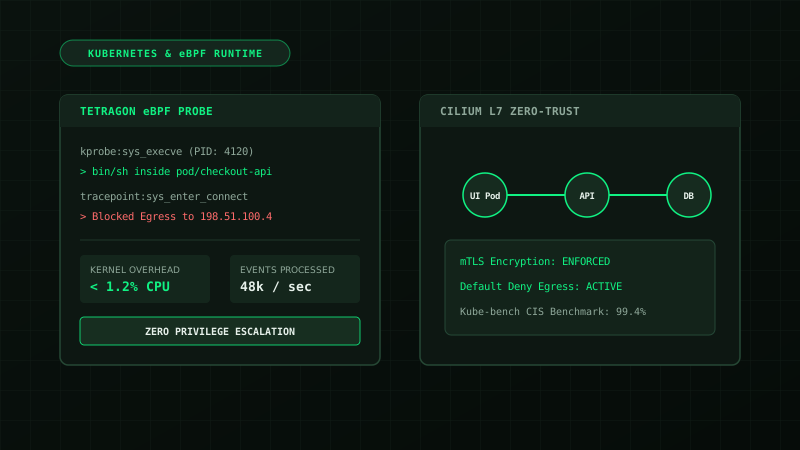
An in-depth Kubernetes security engineering deployment enforcing zero-trust network boundaries and deep kernel-level visibility without application sidecars.
Architecture Overview
    flowchart TD
  subgraph K8s ["Kubernetes Node (Linux Kernel 5.15+)"]
      subgraph UserSpace ["User Space Pods"]
          WebPod["Frontend Service"]
          ApiPod["Checkout API"]
          Attacker["Compromised Pod"]
      end

      subgraph eBPFPlane ["eBPF In-Kernel Tracing"]
          Cilium["Cilium CNI (L3/L4/L7 Network Policy)"]
          Tetragon["Tetragon eBPF Sensor (kprobe / tracepoint)"]
      end

      subgraph SecurityPlane ["Control & Alerting"]
          Falco["Falco Detection Engine"]
          SIEM["Security Operations (Prometheus / Sentinel)"]
      end
  end

  WebPod -->|Allowed mTLS Traffic| ApiPod
  Attacker -.->|Unauthorized Port Scan| ApiPod
  Attacker -->|Attempted Root Shell| eBPFPlane

  eBPFPlane -->|Kernel Block & SIGKILL| Attacker
  Tetragon -->|JSON Telemetry Stream| Falco
  Falco -->|Real-Time P1 Alert| SIEM
Key Implementation Details
- Cilium Network Policies:
- Explicit
default-deny-ingressanddefault-deny-egressacross all tenant namespaces. - Mutual TLS (mTLS) with automated cryptographic identity attestation.
- Explicit
- Tetragon eBPF Tracing Policies:
- Traced
sys_execvesyscalls inside non-root containers to block unexpected shell invocations (/bin/sh,/bin/bash). - Monitored capability additions (
CAP_SYS_ADMIN,CAP_NET_ADMIN) to prevent container escape attempts.
- Traced
- CIS Kubernetes Benchmark Compliance:
- Evaluated worker nodes and control plane with
kube-benchachieving a 99.4% pass rating.
- Evaluated worker nodes and control plane with